Showing posts with label Read Across America. Show all posts

Sunday, March 2, 2014

Thank You, Mr. Falker, & Others--Plus RAA Goodies!


It's another snowy weekend in Illinois!  Is it really March 2??

Must Read ELA & Character Ed Mentor Texts

Glad to be linking up with Amanda and Stacia from Collaborative Cuties for their Must Read Mentor Text Linky! This week's topic is language arts--perfect timing for what we have been exploring the last two weeks.

Wanted to share my journey with the kids this past two weeks in exploring the challenges characters face in realistic fiction and how they respond to those challenges (CCSS.ELA-Literacy.RL.2.3 Describe how characters in a story respond to major events and challenges.) While ELA standards have been a focus, so too have the character lessons to be learned--invaluable!

Our journey began with one of my all-time favorite picture books, Thank You, Mr. Falker by Patricia Polacco. This text immediately came to mind as a story of challenges, responses, and triumph.  It is the story of Trisha (Patricia Polacco) and her struggle to become a reader amidst loss, change, teasing/bullying, and low self-esteem.  Furthermore, it is the story of how she overcame her struggle with the help of Mr. Falker, her fifth grade teacher.


I read the text aloud to students, and with it came much thoughtful discussion.  We talked about the different challenges Trisha faced and how she responded to her challenges--what she thought, felt, and did in response.  Here is the organizer we created as an anchor chart.  Then students completed another organizer in which they described Trisha's responses. 


You can download these organizers by clicking here!

We went on to read a wonderful text, Those Shoes by Maribeth Boelts.  Another great story for exploring character challenges and responses.  Jeremy wants "those shoes" so badly, but his grandma can't afford to buy them. One day he finds a pair at a second hand store, but they are too small.  He buys them anyway--with his own money.  Jeremy is eventually faced with a difficult decision--what to do with those too-small shoes...


This time, students got into small groups to discuss the challenges Jeremy faced and what he thought, felt, and did in response. 

A natural progression was the sharing of our own personal challenge and how we respond to this challenge.  I feel it's important for students to understand that the characters in realistic fiction are often "like you or me".  They are people we "meet" when reading and we can put ourselves in their shoes.  For this reason, I asked students to share some personal challenges.  We started by simply making a list of different challenges on chart paper.  We talked about how we all have challenges, no matter how big or small they may seem to someone else.  It is also important that we respect others' challenges--in sharing our challenges we learn more about one another. 


Students completed a graphic organizer related to their personal challenge. I wanted to give students the opportunity to share their challenge and how they respond, but I told them this was on a volunteer basis only.  I was pleasantly surprised by the number of students who wanted to share--almost all.  The maturity students showed as their classmates shared was amazing! Each showed respect and understanding as their fellow classmates shared personal challenges such as not being able to read well, trying to stop carrying a blanky at home, not being able to get words out, stage fright, getting embarrassed easily, difficulties with gymnastics, and more. What a wonderful character lesson, and as my fellow teaching mate said, "It was like therapy." 

Finally, we ventured on to guided reading groups.  I chose some text to use based on students' levels and some needed character lessons. Click on each title to read a synopsis.

My Secret Bully by Trudy Ludwig
Spaghetti in a Hot Dog Bun by Maria Dismondy
The Chalk Box Kid by  Clyde Robert Bulla


In guided reading rotations, students have also been working on turning their personal challenges into stories, and they have been independently reading The Potato Chip Champ by Maria Dismondy (a read aloud from earlier in the year) and completing a graphic organizer related to our focus. You can download the organizer here.

I cannot say enough how beneficial this exploration has been.  Wonderful, rich texts make a world of difference.  I encourage you to check them out, if you are not already familiar with each.

If I were to choose one word to describe ALL of the texts, I would choose thought-provoking.

Fly on over to Collaboration Cuties to check out more language arts mentor texts.

http://collaborationcuties.blogspot.com/2014/03/great-language-arts-mentor-text.html

Read Across America Goodies!

Just wanted to re-share a couple of Read Across America goodies from previous posts. Enjoy!


All the best for a wonderful week ahead!


Friday, February 7, 2014

Fabulous Finds Friday & Five for Friday


It's FRIDAY!  

Thanks for flying on over for our Fabulous Finds Friday Linky and Five for Friday with Doodle Bugs Teaches!


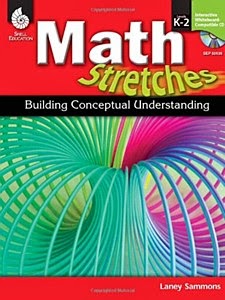
Fabulous Find: Math Stretches

A couple of summers ago, I heard about Laney Sammon's book Guided Math. I just knew I had to buy it and read it for myself. Guided math was something I always wanted to do, especially since I had been doing and loving guided reading for 10 years, but I just couldn't quite grasp how to get it up and running in my classroom. Her book was great and I really liked her idea of Math Stretches. They are short, simple math activities the kids do to "stretch" their brain into thinking mathematically.

http://www.amazon.com/Guided-Math-Framework-Mathematics-Instruction/dp/1425805345

Well fast forward to about a month ago. I read (probably on a blog, or Pinterest) that Ms. Sammons came out with a book that focused just on Math Stretches and ordered it immediately (don't ya just LOVE Amazon Prime:). The book I ordered is geared to K-2 and it is fabulous!! Ms. Sammons has GREAT math stretches in all areas of math (number knowledge, algebraic operations, measurement, geometry, data). I have it ready to go when my students arrive in the morning, and we discuss the stretch at the beginning of our math block. She has everything laid out in this book and even when I have a sub, the sub can read the explanation and what the students are to do. Something I don't have to write in sub notes!
http://www.amazon.com/Math-Stretches-Building-Conceptual-Understanding/dp/1425806368/ref=sr_1_1?s=books&ie=UTF8&qid=1391814122&sr=1-1&keywords=math+stretches+k-2

This is the K-2 book I have. She has them available in 3-5, and 6-8 also. 
 I HIGHLY recommend it! 


Two-Word Winter Poems


If you have never tried writing two-word poems with your kids, they are a great for any age!  What's so nice about two-word poems? The format is EASY, a two-word poem can be written about ANYTHING, and writing them is a great opportunity for students to use strong adjectives and verbs (personification, too--though I do not use that term with my second graders). Courtney and I just got done doing two-word winter poems with our kids.  The first step was for students to brainstorm any words/ideas that came to their minds when they thought of winter. The lists were long. To reinforce the use of adjectives, we worked as a class to generate some strong adjectives that could be used to describe various nouns that students had on their lists.  Students circled all of the nouns on their lists, and this was a reminder that adjectives could be used to describe those winter ideas (if they chose to include them in their poems).  We also talked about using strong verbs and describing those actions.  We have not worked specifically on the term adverbs as of yet, but this was an introduction to this concept.  The next step was for each student to choose a focus for his/her poem.  Some choices were snow (in general), fun in the snow, snowflakes, bundling up, a fireplace, and hot cocoa.  Finally, students were off and working on their poems.  The rules--two-words per line with a minimum of 5 lines. Oh--and their ideas must "fit together" and make good sense.  I did not provide a lot of guidance during the writing stage.  Students' creations were fabulous! They were perfect to accompany our wintery tree artwork.


Eats, Shoots, and Leaves: Mini-Lesson & Class Book


Many of you have probably seen this mentor text for teaching conventions (use of commas) in writing--Eats, Shotts, and Leaves by Lynne Truss.  I saw a need for more work with using commas consistently and correctly to separate words/ideas in a series within the context of student's writing, so I decided to use this text for a mini-lesson.  It's a fun, yet useful, presentation of how important it is to use commas correctly.  While it presents the use of commas in various ways, other than to separate words/ideas in a series, its illustrations help students understand the purpose of punctuation--to tell their readers how to read their writing.

Here's an overview of the mini-lesson:

Read aloud text.  Students will laugh! Stop to discuss why the text is so funny.  Students will realize how one small thing, a comma, can change how a simple sentence is read. Reassure students that they do not need to know all of the different ways commas are used in the text. Yet, let them know they will need to use commas correctly to separate words/ideas in a series.  Ask students if they remember a page in the text where the author used this skill.  Revisit these pages. Tell students they will get a chance to use commas in this way in the creation of a class book. Project pages from the text that are specific to the skill being taught.  Then give each student a prompt such as, My __________ loves to...  Model using the prompt to write a sentence with the use of commas.  Example: My grandson loves to drink chocolate milk, play Batman, and listen to me read.  After students have finished writing their sentences, tell them to close their eyes and picture what is happening or being described.  Then allow students to illustrate. Compile student work into a class book for future enjoyment and easy reference.

Here are some pages from our class book...


Math Bags
One night, when reading the many wonderful blogs I visit, I came across First Grade Buddies. I read how they incorporate Math Bags during their math block. Now I spend A LOT of my nights and weekends printing, laminating, and cutting activities for my math workstations, and was looking for something that was simple, but still reinforced the math skills my students need. Their Math Bags were just what I was looking for. They have created math skill activities that my students can do independently. I love how the directions for students are easy to follow, I love that I don't have to use colored ink, I love that they reinforce skills we have worked on in the classroom, and I love that they meet Common Core standards.  They are a win, win with me!
  
Math Bags for 2nd Grade THE COMPLETE SET (30+ Common Core

I purchased the 2nd grade set, but I  know they have them available for Kindergarten and 1st also.  I purchased the seasonal Valentine's Day version too!

Math Bags for 2nd Grade: Valentine's Day Version! (10 Math


New Clipart

Another snow day this week meant some extra time to create some new clipart!  

Check them out in my Graphics by Sarah Beth TpT Store!

http://www.teacherspayteachers.com/Product/St-Patricks-Day-Clipart-Whimsical-Borders-Shamrocks-1098659http://www.teacherspayteachers.com/Product/Read-Across-Amercia-Whimsical-Scallop-Circle-Borders-Clipart-Borders-1083610

Feel free to link up your fabulous finds! Have a wonderful weekend!

Saturday, March 2, 2013

Read Across America -- Seuss-Inspired Snack Stew

As a final celebration of Read Across America this week, we made Seuss-Inspired Snack Stew!  I adapted this recipe from www.food.yourway.net (eliminating the nuts and adding a little) and put together a recipe sheet for the kids to take home. It was a perfect recipe that allowed for each kid to take part in putting it together. We also had a great lesson when figuring out how much of each ingredient was needed when we doubled the recipe.  It was a great opportunity to use fraction models to double 1/2 and 1/4.  Of course, putting all of the ingredients in the brown, paper grocery bag and shaking it all up was great fun! Download the recipe here, and enjoy this savory, nut-free snack! The kids loved it!


Hat graphic courtesy of The 3AM Teacher.  Border art by Zip-a-Dee-Doo-Dah Designs.

Monday, February 25, 2013

Fuzzy & Fun!! Read Across America Bookmarks

I think I like fuzzy pom-poms almost as much as googly eyes--they just make me smile inside... :0) Not to mention, fuzzy pom-poms remind me of the whimsical trees in Dr. Seuss's books, so I decided to make some bookmarks for the kids.
  

The more that you read, the more things you will know.  The more that you know, the more places you'll go (I Can Read with My Eyes Shut by Dr. Seuss).

Grinched font courtesy of dafont.com and book graphic by The 3AM Teacher.

I have linked a PDF bookmark file.  Just print on colored card stock, laminate, punch, add ribbon (1/8"), and use a hot glue gun to attach the pom-pom.  I purchased my black grosgrain ribbon and colored pom-poms at Michael's.  I think the kids will really enjoy these!